
BYI 2011: Unsettling Weather
BYI 2026: Plus ça change, etc; garlic; a poem


This was sobering as hell to listen to and read, 15 years on.
What are we even doing, y’all? We need to talk about it.
Consolation prizes: BYI 2026 garlic crop by the numbers AND a short poem.
WEATHER WHOAS
Original air date: July 9, 2011 on WILL-AM
Listen to the segment
Original radio script below, published with footnotes
I have to confess: I’m a little worried about the weather.
No, really, I am. The fact that I think a lot about the weather surprises no one who knows me in my day-to-day life. I’ve been a weather geek since I was a kid in Florida, tracking hurricanes through the Gulf of Mexico using only coordinates given over the radio and a big map.1
Now I keep track of the weather every day; it’s part of my job as a farmer’s market manager.2 I worry not just about bad weather for the day of the event, though we’ve had more than our fair share of that so far this season. I also worry about bad weather and how it affects the farmers I work with. Eating locally and seasonally, which is something more and more of us are trying to do or are interested in doing, really implies a certain dependence on the weather behaving in ways we’re accustomed to it behaving right here at home. But eating, period, implies a total dependence on the weather behaving in ways all eaters need it to and expect it to throughout the world.3
Here’s an example of the former: Instead of a really late hard-freeze spelling disaster for our strawberry season, as is occasionally the case in our area, this May’s cold and damp weather, followed by this really intense period of high heat we’re currently experiencing an early June4, has been the culprit. Some farmers have even closed their U-pick farms to visitors because there have been no berries. Others have had some berries, but it’s rained so much and with such thunderous tornado-y drama that what was there couldn’t be picked in time for market or for distribution through other local outlets. I love asparagus and all the other first fresh things that put in an appearance after a long winter, and this winter was long. But strawberries are, like, this reward, in my book. You get through winter, you eat the green things in early spring, and then you get to buy or pick strawberries and enjoy the resulting jams, pies, short cakes, and other delicacies. Strawberries usher in the rest of the growing season, usually.
But, you know, there are other, lesser strawberries available. They don’t taste the same because there’s nothing like a fresh local strawberry, but we can get strawberries… and this is an example of the latter part of what I was talking about: the part about how eating at all implies a total dependence on the weather behaving in ways we consider normal. Those strawberries have been able to grow in California or Florida this year. So have the oranges for the orange juice we drink, the melons in early spring. And then there’s the availability of most produce year-round. Asparagus in December comes from the southern hemisphere, but what happens if their weather is not doing what we expect it to do in those places? Or what if our own weather doesn’t do what those other places expect it to do?
The weather has been a major topic of conversation so far this year. Not just in my office in Urbana or between relatives over email or the phone or between friends on Twitter and Facebook. The weather and its extreme behavior is being talked about everywhere, and it’s not just polite conversation. It’s in the press more than usual too, and not just because of this spring’s disasters.
Just in the last few weeks there have been pieces in The New York Times, The New Yorker, and Newsweek talking about the severity and destructiveness of this year’s weather worldwide, and its potential effect on food prices, which are predicted to rise sharply, and the so-called “new normal” that local climates have already been experiencing and will continue to experience.
One of the New York Times articles5 mentioned the hardiness map that helps farmers and gardeners figure out what plants will grow best when and where. If you pick up any seed packet or read any gardening book, there’s mention of zone appropriateness for crops. What can survive winter in Zone 8, for example, would never survive winter and Zone 4. What would grow like gangbusters in Zone 7 would barely get going in Zone 3. Zones have been shifting already, and it’s predicted that by 2070, Chicago could be in Zone 7, warmed up from Zone 56. That means Chicago’s climate and ours [in central Illinois] will better resemble that of current-day Birmingham, Alabama.
While all that warm weather sounds great in theory (especially after the winter that seemed to never end), there’s also something comforting about knowing that you can travel or move to that kind of weather—that it’s exotic and unusual, but it’s certainly not something that would happen where it’s not supposed to—like here.
The weather is never perfect. Any farmer of any size farm will tell you that. It’s always too wet, or too dry, or too hot, or not hot enough. But this year feels like it might be the beginning of something different. We just might have to make some serious adjustments as home gardeners, as farmers, and as eaters.
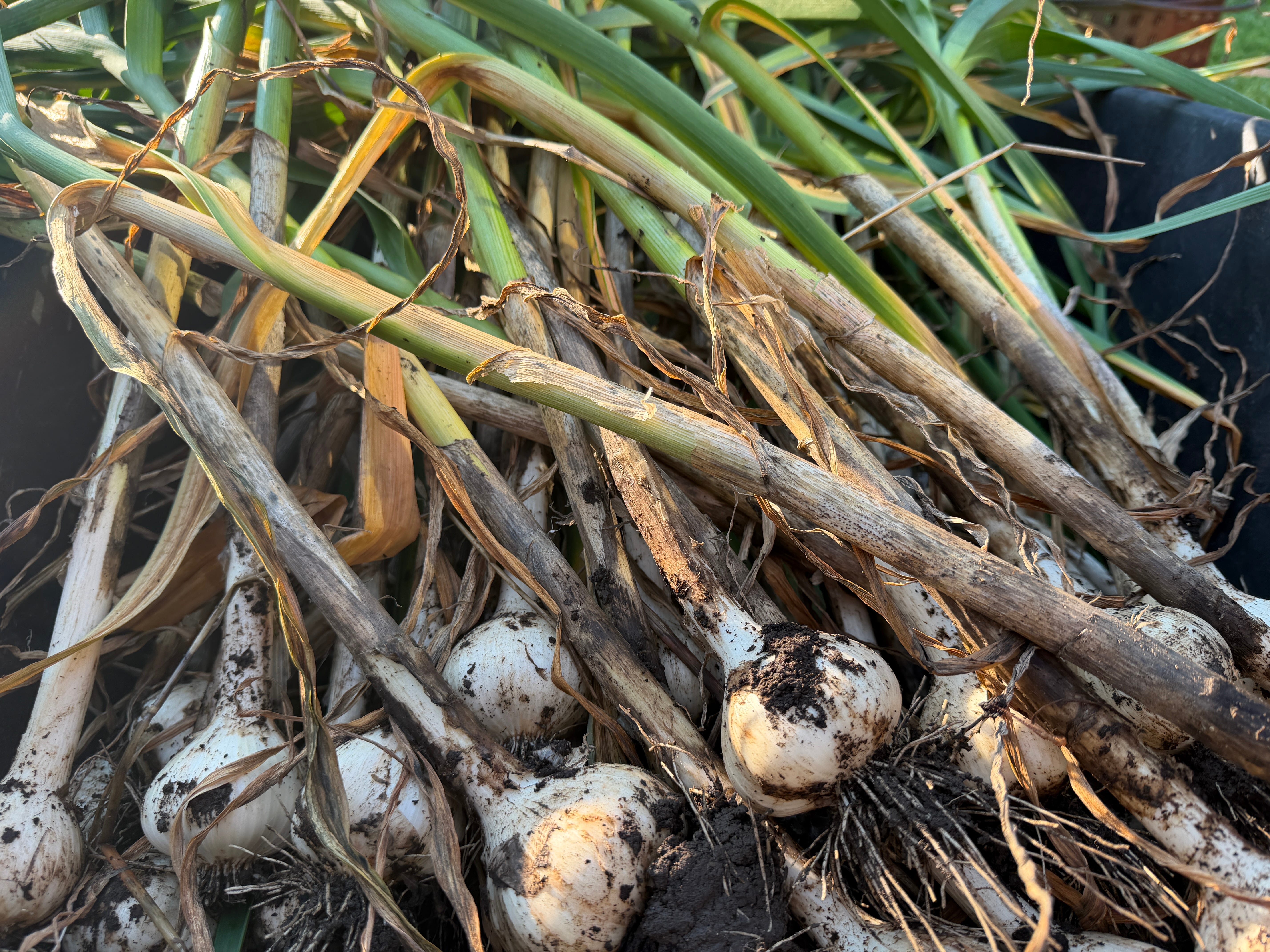
Date planted: Early November 2025
Number of cloves planted: ~120
Source of seed garlic: My own stash. Parent cloves were given to me years ago by Lisa Mileur
Date harvested: July 13, 2026
Number of bulbs harvested: ~115 (5 used as green garlic this spring/early summer)
Harvesting partner: Jim
Harvesting method: Gently pulled from ground; no digging necessary7
Most uttered quote while harvesting: “I am so grateful to Past Me for planting this”
Curing method: Reused old commercial baking rack
Curing location: Garage
Favorite uses: Pesto, roasting with tomatoes or chicken, storing for winter, barter, seed garlic for next year
The Good Pepper Incense
Today I will burn the good pepper incense
from that summer trip to Minneapolis.
2019
a time in between with
whiffs of real trouble and
washed out heat.
We watched soccer in that bar
with LOTR-meets-TRON vibes
I still drank then
Anyway
Today I will burn the good pepper incense
I managed Urbana’s Market at the Square for five seasons, from 2008-2012
Emphasis added July 2026.
The summer of 2011 ushered in one of the mildest winters in memory, in central IL. High temperatures in December often reached the 50s and 60s, and low temperatures rarely went below 20 degrees in January 2012.
I cannot find the article in question. Either I suck or Google sucks. Probably a combo.
As of this writing, Chicago is Zone 6a.
We’ve had decent rain this year, but stored rainwater has made the difference in all parts of the garden. More on this in the next newsletter.
We haven't had rain in months, are having record high temps and wildfires all around our region. It is hard not to feel anxious these days and still there are tomatoes on the vine and plenty of potatoes. Lovely little poem! xx
Lisa, I love these BYI throwback posts, updated with reflections on your garden these days. The garlic crop bit made me smile! Keep writing and sharing!