
(Still) Imagining Microproduction as the Standard
Everything old is new again, always

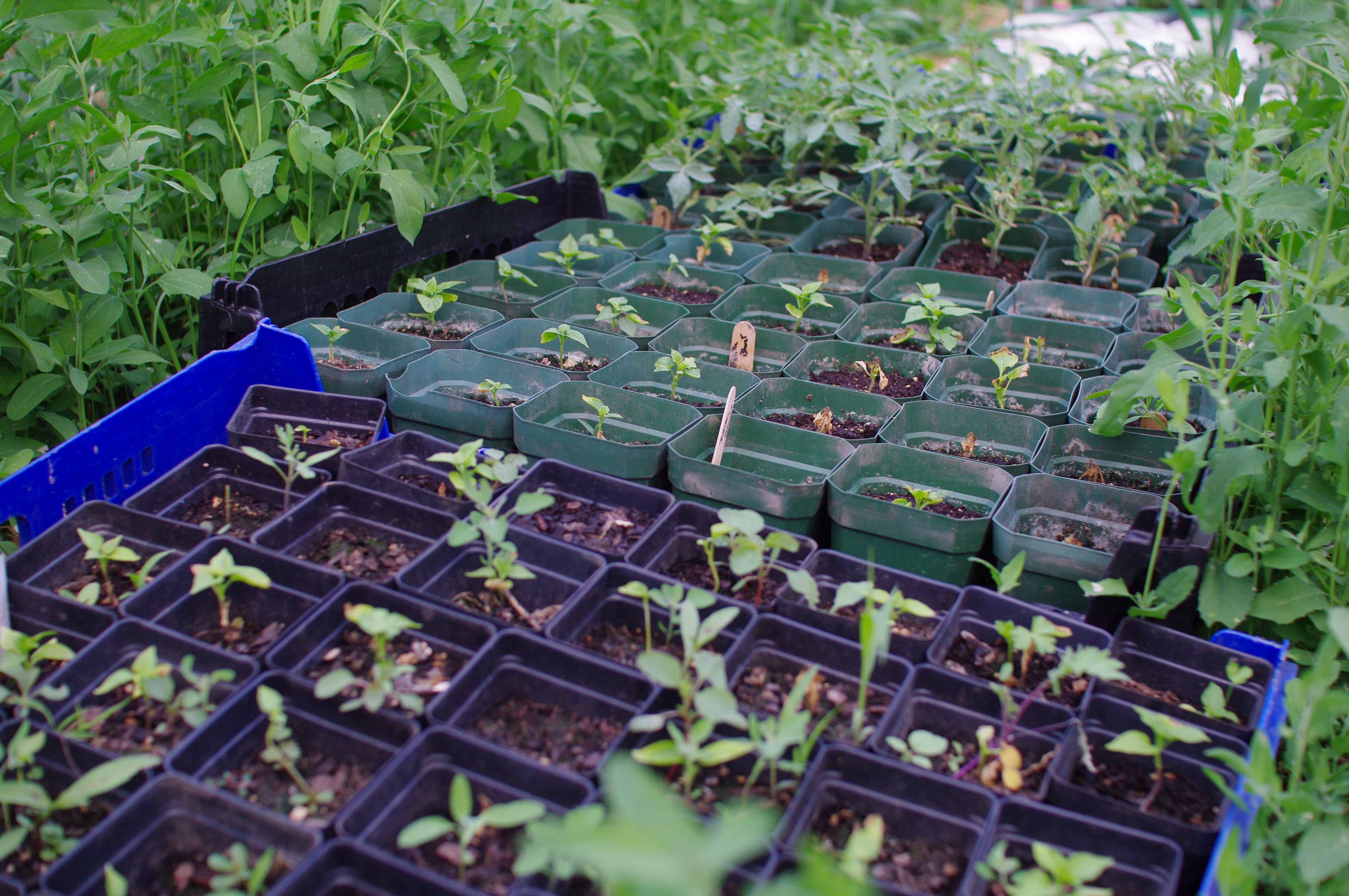
Before there was Backyard Industry, there was In My Backyard. And immediately before there was In My Backyard, there was this piece.
I had completely forgotten I’d written this. I was even more surprised to discover, after running across it in a folder buried deep on a hard drive, that it had been published, in an edited form, by Smile Politely (very) shortly before the first “IMBY” radio installment aired on June 10, 2010. The full, unedited version of the Smile Politely piece is below.
Even more astonishing to me: We’re still having so many of the same conversations about the problems with hyperscale food production 16 years later. It’s just that now we’re having them with bonus concerns about climate change; the relentless encroachment of data center development; the nonconsensual drifting of agricultural chemicals onto small farms, residential gardens, and schoolyard gardens; drought; floods; decreasing soil fertility; the rising cost of producing, distributing, and buying food; the loss of food preparation skills and knowledge thanks in part to our general preference for as much convenience as possible; the slow disappearance of personal and public libraries as resource centers; and the general enshittification of the internet.
Over the coming months, I’ll return to some of the themes and stories IMBY/BYI covered during its 2010-1016 run by re-viewing some vintage radio and video episodes through a current-day lens. I’ll write about what’s happening in 2026, too.
Is it getting late in the game? Yes. Is it too late to play? Heck, no.
IMAGINING MICROPRODUCTION AS THE STANDARD
Originally published by Smile Politely on June 9, 2010
Republished here unabridged and with footnotes
So… the nature of the work that I do, which is primarily managing a large farmers market in east Central Illinois1, requires that I get out into the Illinois countryside and visit some of the farms that sell fruit and vegetables at the market. So each spring and summer I hit the road.
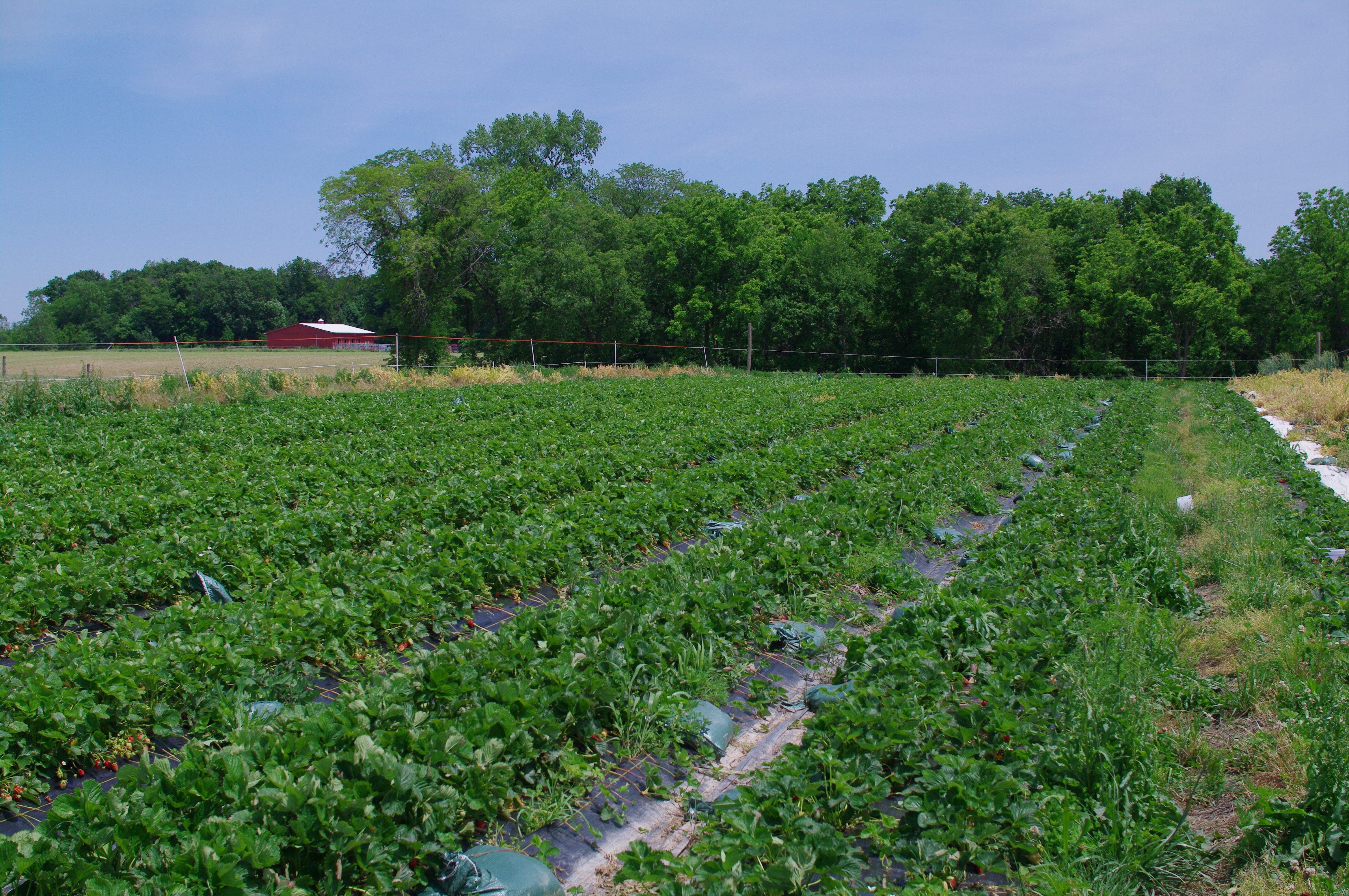
Here’s something I noticed on my travels: Small-scale fruit and vegetable agriculture is just not very visible in Illinois. When you’re on the interstates, you don’t see the smaller farms, which are most often findable when you get off at this exit, then take the first right, drive 8 miles, then take the left by the graveyard, etc. When the main roads—the interstates—bisect farmland in Illinois, it’s most often land on large farms, farms with hundreds or even thousands of acres growing primarily corn and beans and maybe some wheat or oats. These large farms are hard to miss – they take up the most acreage and have huge, exotic machinery working out in the fields and driving on the county roads. If you saw the machines out of context, you might not be able to guess which industry they belonged to.
I thought about this as I drove along interstates 57 and 72 and 74. I thought about the small farmers who grow fruits and vegetables for farmers’ markets and other outlets, and I thought about their tractors and planters and greenhouses and, quite literally, their farm hands, and I thought about how different this is from what I was seeing all around me along the interstates. It really struck me: The most visually apparent agriculture in our area is also agriculture that affects us less obviously. We don’t eat field corn or the soybeans grown in these fields, though some of us eat animals that eat these foods or products made from these foods. When we think about “farms in Illinois”, we might see a pastoral farm scene in our heads, but the reality? Like the locally-made shirt says, “Corn and beans, beans and corn—variety is the spice of life”.2 Of course, the shirt just pokes a little bit of friendly fun at Big Ag—the food and, occasionally3, the fuel that is grown is, without a doubt, a hugely important part of our state’s current food system and economy. It literally dominates the landscape.
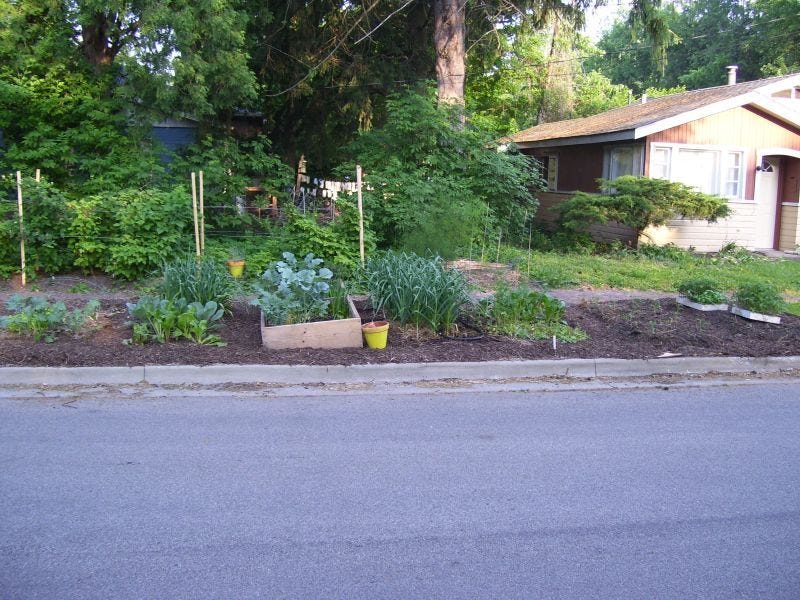
But what about the agricultural activity that lives in Big Ag’s shadow—the parts we don’t see from the road? Local (and for these purposes, let’s use the state of Illinois as a guide) food production by small growers, and local (in this case meaning REALLY LOCAL!) food production by microgrowers: the people who have a few tomato plants in on their patio, the people who steward community garden plots, the people who plant impossibly large gardens on city lots, and the people who grow whatever food they can wherever they can.
Just over a year ago, state legislators learned that despite Illinois’ reputation as an agricultural state, the vast, vast majority of our food—over 90%—is imported from other places. And it’s not just our state. When the Leopold Center For Sustainable Agriculture at Iowa State University recently looked at the potential for increased fruit and vegetable production in six Midwestern states, they came to the conclusion that just under 300,000 cropland acres would be required to provide the partial- year needs for all six states. That area is the equivalent to the average amount of cropland in one of Iowa’s 99 counties. This could be the best of both worlds—the social and economic benefits of so-called “lifestyle agriculture”, coupled with the yields of production agriculture. There is room for everyone with this type of agriculture.
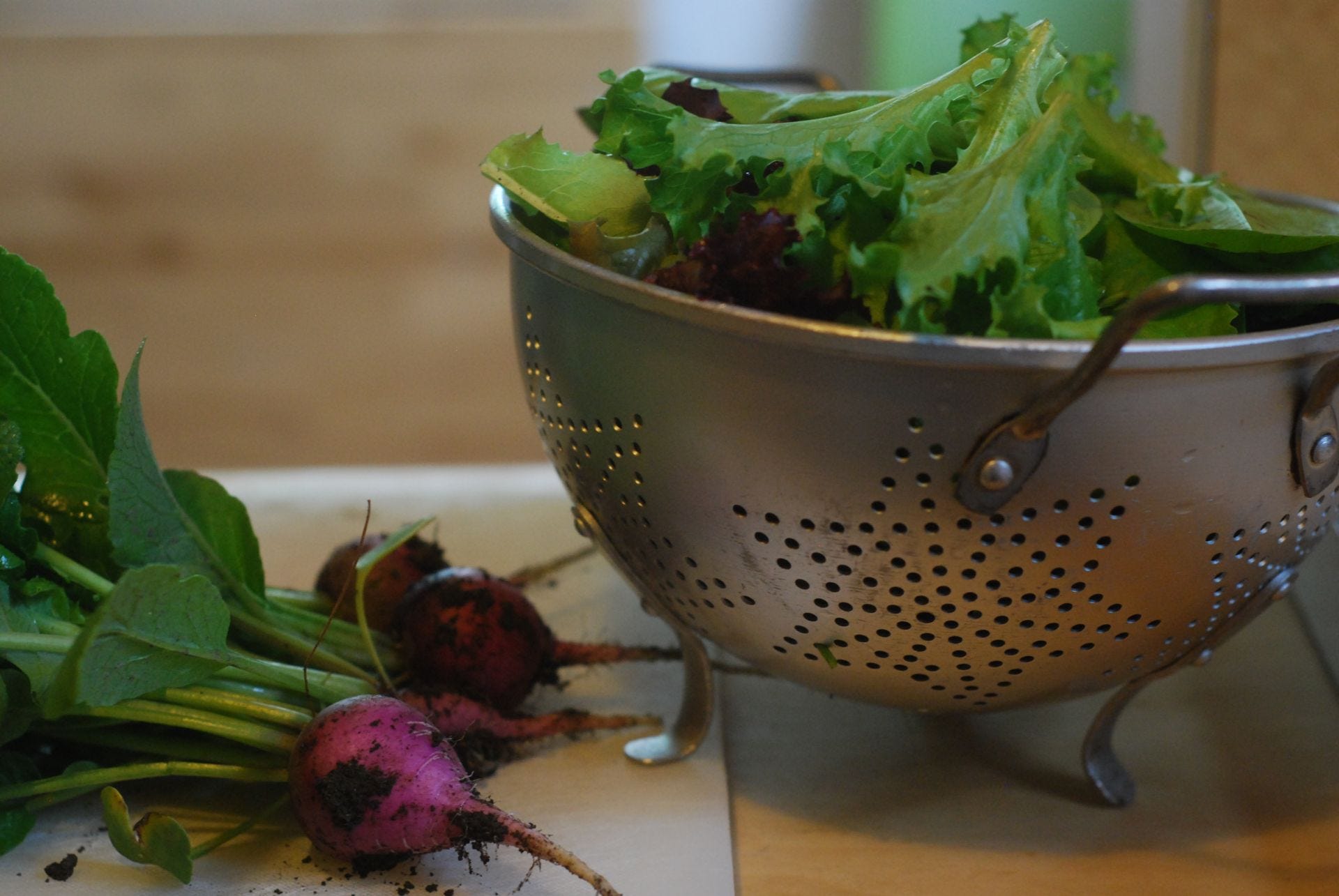
This is, too, about taking advantage of what we have right here not just in our state, but also our towns and our neighborhoods. We live atop some of the best soil in the world for growing food. Wouldn’t it be cool to foster closer relationships between growers and eaters, relationships that would encourage conversation not just about farming, but also about food preparation and preservation, arts that are slowly becoming lost?4 It’s about possibly teaching eaters, especially young ones, to become microproducers, if only to have a better understanding of the work and the resources it takes to produce food.5 And it’s about creating a convivial environment that encourages people to try new things, to ask questions of each other, and to, put it bluntly, get their hands dirty, whether it’s in a yard or in the kitchen.
Talk about food is everywhere, from the White House to the mass media to the underground press to conversations between friends and neighbors. Never before has there been such wide interest in where food comes from, how it was grown, who grew it, who should have access to which kinds of food, what is good for us to eat and what is not, what can be sold at farmers markets and by whom, what’s for lunch in school cafeterias, prisons, hospitals, and other institutions, how our food suffers (or might suffer) the effects of weather and resource depletion and pollinator reduction—the list is endless.6 There are books about the food system, TV shows7 addressing the food system’s inadequacies, and countless blogs dedicated to food and… the food system. We are, quite frankly, soaking in food system news.
What I keep thinking about, though, is the immediate impact of what each of us does at home, and in our neighborhoods and towns. How seeing someone build a garden or plant a seed or make yogurt without special equipment can get a person thinking, maybe I can do that.
As I write, I can see, on my bulletin board, a quote by a guy named Brian Snyder, the executive director of the Pennsylvania Association for Sustainable Agriculture. He says:
The revolution in agriculture that we are working for has never been, nor ever will be top-down in nature.
It’s this work that isn’t really visible from those main roads. It’s happening in our own backyards.
It was my privilege to be the director of Urbana’s Market at the Square from 2008-2012.
The shirt’s designer, artist Larry Steinbauer of Farmboy Artworks, relocated to Florida from C-U some years ago. I know I have a photo of the shirt somewhere.
Much more than occasionally in 2026.
It can be argued that TikTok, Instagram, and other social media have given new life, in a sense, to many of these activities, especially since 2020, but I’m unconvinced that online courses are an answer.
More recently I’ve been thinking about how even growing a few tomatoes (why is it always tomatoes?) can indirectly help take pressure off a stressed local or regional food system.
We should be talking much more about food waste!
True in 2010, and true now. To wit: Zach Galifianakis’ This is a Gardening Show.
Great post. Yes, we are still talking about many of same things. However, we are now talking about regenerative farming and the many negative health and environmental impacts of industrial farming. The recent movie, Groundswell, does a powerful job of talking about this issue. You can watch it on Prime Video, here's a clip. https://youtu.be/yjd6Sylmukc?si=jdRaob6Ya0V9bPXr